



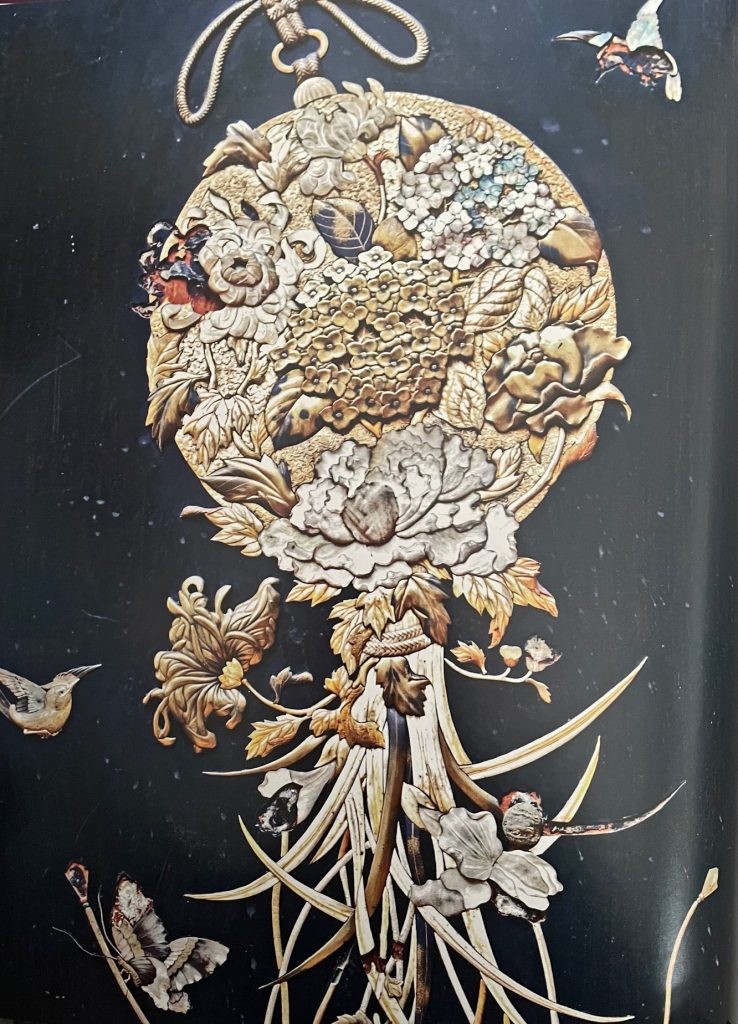
Japanese woodblock prints, particularly those known as ukiyo-e, played a crucial role not only in the visual culture of Japan but also in shaping the artistic transformations of nineteenth-century Europe. Emerging from religious and popular traditions, these prints developed into a sophisticated art form that profoundly influenced Western painters seeking new modes of representation. Through their distinctive perspectives, flattened compositions, and symbolic engagement with nature and everyday life, ukiyo-e prints became one of the most important sources of inspiration for Impressionist and Post-Impressionist artists.
Japanese woodblock prints were initially used as a means of religious communication by Buddhist monks who traveled from China to Japan. In the seventeenth century, however, woodblock printing evolved into a highly popular art form in Japan under the name ukiyo-e, becoming the most widespread artistic expression of the Edo Period. Influenced by Zen Buddhist thought, which emphasizes the transience of life, these works came to be known as “Pictures of the Floating World.” They reflect Zen philosophy’s reverence for nature and its teaching of living fully in the present moment.
Artists influenced by Zen Buddhism often chose nature as their primary subject matter and expressed fleeting emotions and impressions in an intuitive and spontaneous manner. This approach became one of the key elements that attracted Western artists. Over time, woodblock prints served as a source of inspiration both technically and stylistically across multiple artistic fields. Common themes included geishas, Kabuki theatre, sumo wrestling, picnics, festivals, Mount Fuji, idyllic landscapes, mythological scenes, as well as depictions of birds and flowers.
By the nineteenth century, ukiyo-e reached a new level of artistic refinement, with Katsushika Hokusai and Utagawa Hiroshige emerging as its most prominent masters. Known as the “Mad Old Painter,” Katsushika Hokusai (1760–1849) focused on traditional Japanese life and striking urban scenes in his works. His celebrated series Thirty-Six Views of Mount Fuji stands out as a landmark achievement and had a profound impact on Impressionist artists through its bold compositions and innovative visual language.
Another artist who attracted the attention of Impressionists was Utagawa Hiroshige. Several compositions from his series One Hundred Famous Views of Edo were directly echoed in the works of Western painters.
The Impressionists’ desire to break away from established conventions of representation made their engagement with Japonism almost inevitable.¹⁶ The unconventional viewpoints, asymmetrical compositions, tilted perspectives, and clearly defined flat color areas found in Japanese prints introduced a visual language entirely unfamiliar to Western traditions. This new aesthetic responded directly to the Impressionists’ search for alternative ways of seeing and depicting the world.
Among the artists influenced by this movement—and by those who followed them in the Post-Impressionist period—were Édouard Manet, Claude Monet, Vincent van Gogh, Edgar Degas, and Paul Gauguin. These painters became leading representatives of the reinterpretation of exotic themes, unconventional compositions, and innovative material and technical approaches inspired by Japanese woodblock prints.
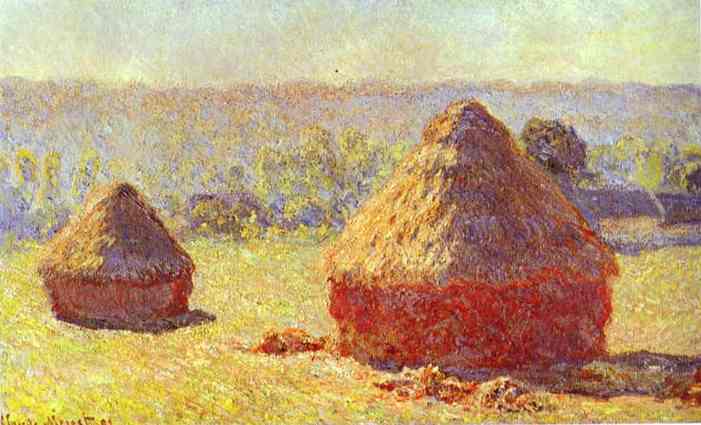
Claude Monet (1840–1926), who introduced a new visual narrative through alternative modes of perception, stands out as one of the foremost practitioners of Japonism. Both in his choice of subject matter and in his technical experimentation, Monet consistently engaged with Japanese aesthetics. His painting Madame Monet in a Kimono (1875), depicting his wife Camille dressed in Japanese attire and holding a fan, exemplifies this influence. Furthermore, the compositional and chromatic similarities between Monet’s Haystacks series (1890–91) and Hokusai’s Mount Fuji (1830) illustrate the depth of this artistic dialogue. The series is famous for the way in which Monet repeated the same subject to show the differing light and atmosphere at different times of day, across the seasons , and in many types of weather.
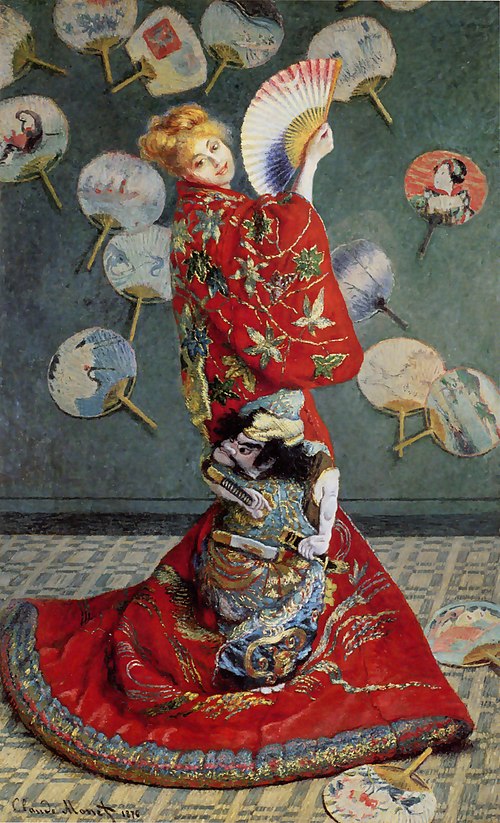
Madame Monet in a Kimono (1875)
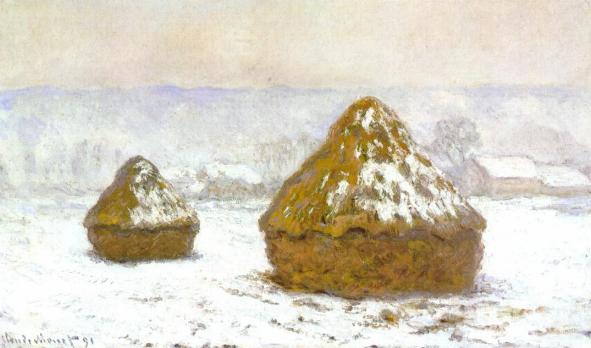
Grainstacks, Snow Effect, 1890–91
Vincent van Gogh’s fascination with Japanese art was equally profound. It is well known that his personal collection included approximately four hundred Japanese woodblock prints. His painting Flowering Plum Tree in Paris (1887) closely resembles Plum Orchard at Kameido from Hiroshige’s One Hundred Famous Views of Edo, demonstrating a direct visual and conceptual connection between Japanese prints and Van Gogh’s work.
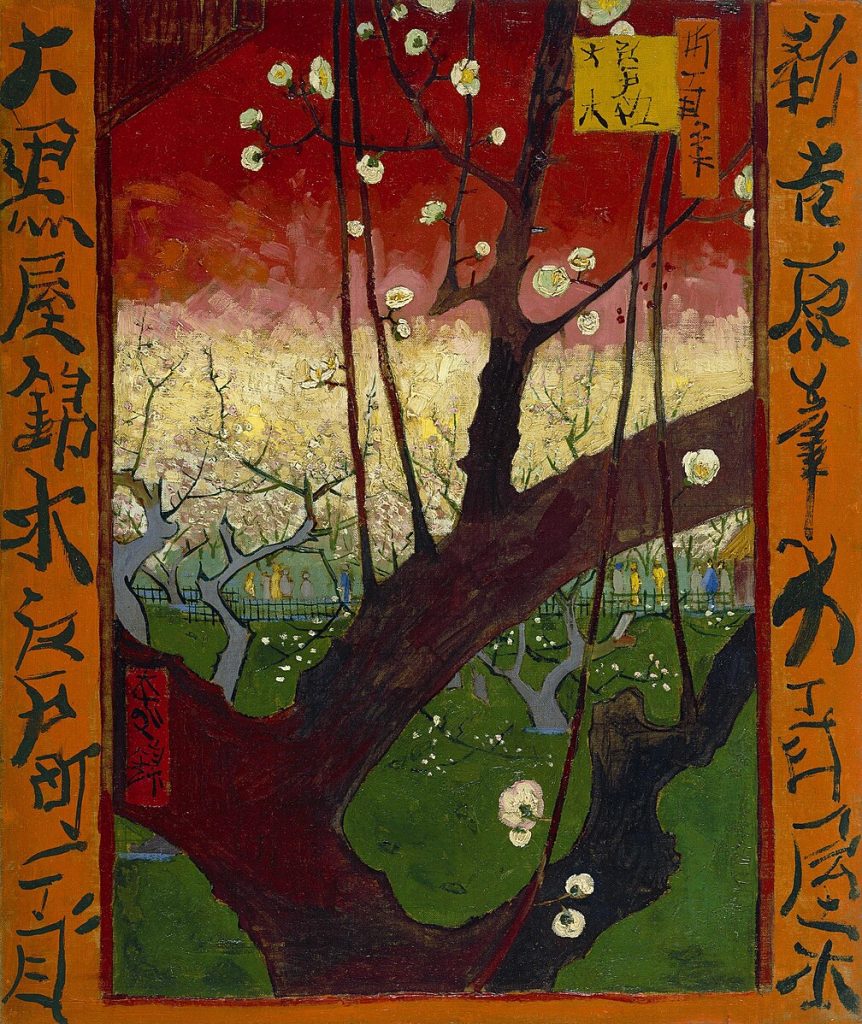
Van Gogh, Flowering Plum Tree in Paris (1887)
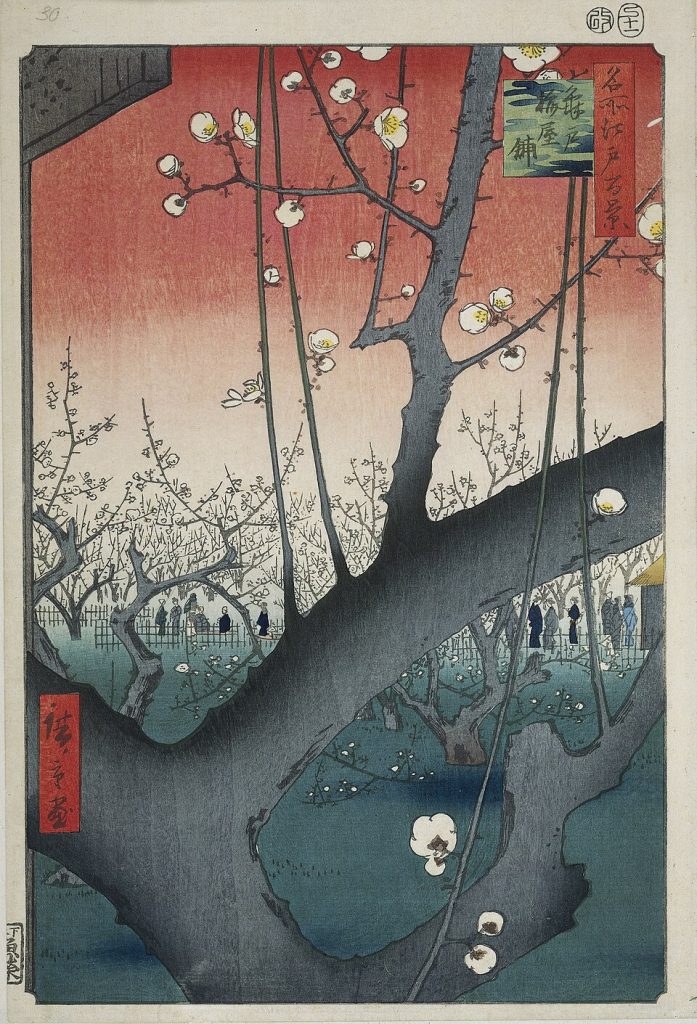
Plum Orchard at Kameido from Hiroshige
Ukiyo-e woodblock prints, rooted in Zen philosophy and Edo-period popular culture, played a transformative role in redefining the visual language of Western modern art. Through their emphasis on nature, impermanence, and unconventional composition, these works provided European artists with new aesthetic possibilities that challenged academic traditions. The dialogue between Japanese printmakers and Western painters not only shaped the development of Impressionism and Post-Impressionism but also established Japonism as a lasting cross-cultural phenomenon in the history of art.
Some examples of Ukiyo-e woodblock prints as follows:
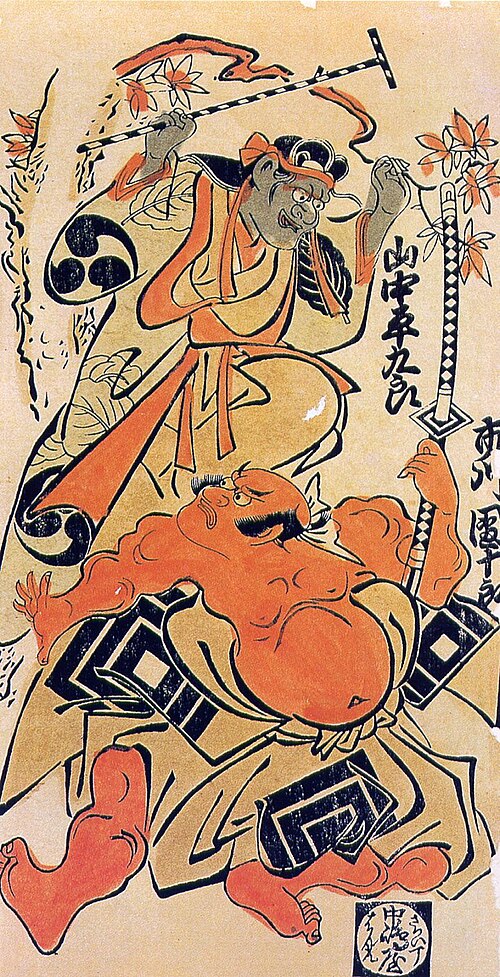
Portrait of actors Hand-coloured print Kiyonobu, 1714
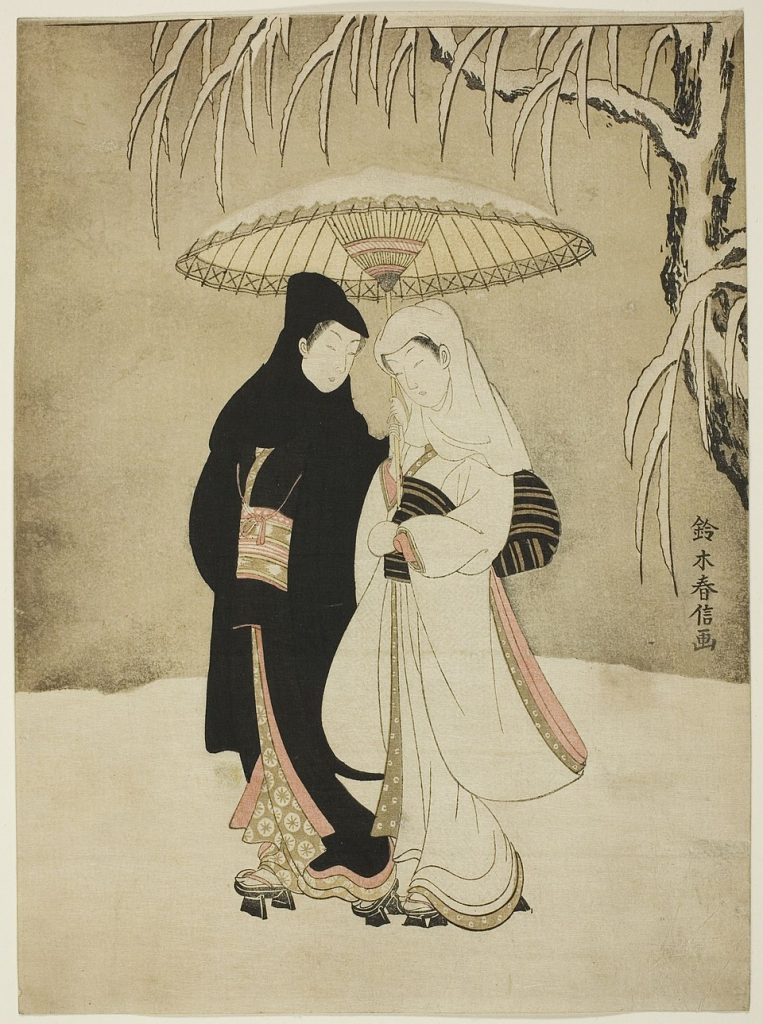
Two Lovers Beneath an Umbrella in the Snow Harunobu, c. 1767
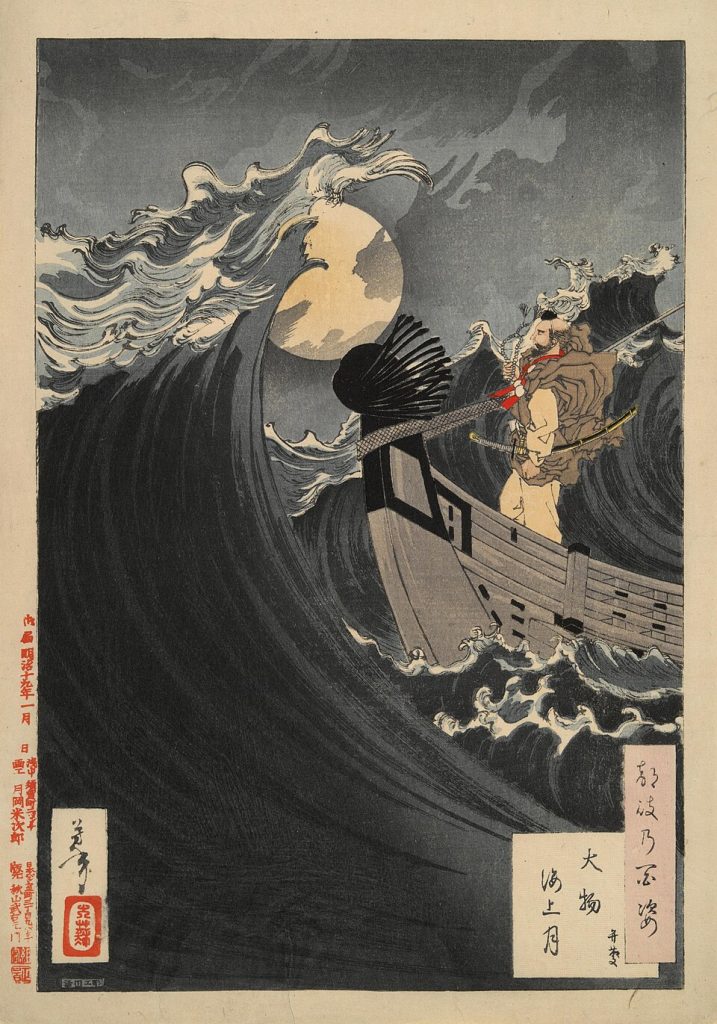
From One Hundred Aspects of the Moon Yoshitoshi, 1891
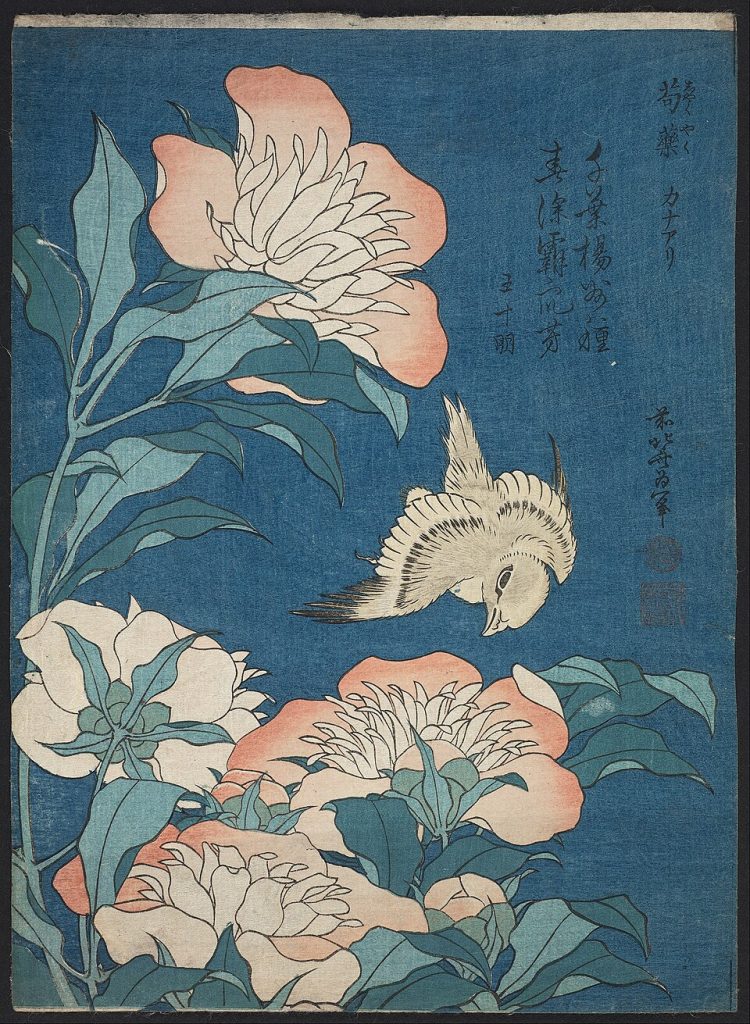
Peonies and Canary Kachō-ga by Hokusai, c. 1834
References
Japanese Wind in the Ottoman Palace (2013). TBMM Collections of National Palaces.
Ukiyo-e Ahşap Baskıları ve Batı Sanatı Üzerindeki Etkileri
Japon ahşap baskıları, özellikle ukiyo-e olarak bilinen örnekleri, yalnızca Japon görsel kültüründe değil, aynı zamanda 19. yüzyıl Avrupa’sındaki sanatsal dönüşümlerin şekillenmesinde de önemli bir rol oynamıştır. Dinsel ve halk geleneklerinden doğan bu baskılar, zamanla gelişerek Batılı ressamların yeni temsil biçimleri arayışında derin etkiler bırakan sofistike bir sanat formuna dönüşmüştür. Alışılmadık bakış açıları, düzleştirilmiş kompozisyon anlayışı ve doğa ile gündelik yaşamı sembolik biçimde ele alışları sayesinde ukiyo-e baskıları, İzlenimci ve Post-İzlenimci sanatçılar için en önemli ilham kaynaklarından biri hâline gelmiştir.
Japon ahşap baskıları başlangıçta Çin’den Japonya’ya gelen Budist keşişler tarafından dinsel iletişim aracı olarak kullanılmıştır. Ancak 17. yüzyılda ahşap baskı sanatı, Japonya’da ukiyo-e adı altında son derece popüler bir sanat formuna dönüşmüş ve Edo Dönemi’nin en yaygın sanatsal ifade biçimi olmuştur. Yaşamın geçiciliğini vurgulayan Zen Budist düşüncesinden etkilenen bu eserler, “Yüzen Dünyanın Resimleri” olarak adlandırılmıştır. Zen felsefesinin doğaya duyduğu saygı ve anın tam anlamıyla yaşanması öğretisi bu eserlerde açıkça yansımaktadır.
Zen Budizminden etkilenen sanatçılar çoğunlukla doğayı ana konu olarak seçmiş, geçici duygu ve izlenimlerini sezgisel ve spontane bir biçimde aktarmışlardır. Bu yaklaşım Batılı sanatçıları etkileyen temel unsurlardan biri olmuştur. Zamanla ahşap baskılar hem teknik hem de üslup açısından birçok sanat alanında ilham kaynağı hâline gelmiştir. Sık işlenen konular arasında geyşalar, Kabuki tiyatrosu, sumo güreşleri, piknikler, festivaller, Fuji Dağı, pastoral manzaralar, mitolojik sahneler ile kuş ve çiçek tasvirleri yer almaktadır.
19.yüzyıla gelindiğinde ukiyo-e sanatı daha da gelişmiş, Katsushika Hokusai ve Utagawa Hiroshige en önde gelen ustalar olarak öne çıkmıştır. “Deli İhtiyar Ressam” olarak anılan Katsushika Hokusai (1760–1849), eserlerinde geleneksel Japon yaşamını ve çarpıcı kent manzaralarını konu edinmiştir. Fuji Dağı’nın Otuz Altı Görünüşü adlı dizisi, cesur kompozisyonları ve yenilikçi görsel diliyle İzlenimci sanatçılar üzerinde derin bir etki bırakmıştır.
İzlenimcilerin ilgisini çeken bir diğer sanatçı da Utagawa Hiroshige’dir. Edo’nun Yüz Ünlü Görünüşü adlı serisindeki bazı kompozisyonlar, Batılı ressamların eserlerinde doğrudan yankı bulmuştur.
İzlenimcilerin yerleşik temsil anlayışından kopma arzusu, Japonizm ile etkileşimlerini neredeyse kaçınılmaz kılmıştır. Japon baskılarındaki alışılmadık bakış noktaları, asimetrik kompozisyonlar, eğik perspektifler ve belirgin düz renk alanları, Batı geleneği için tamamen yeni bir görsel dil sunmuştur. Bu estetik anlayış, İzlenimcilerin dünyayı farklı görme ve tasvir etme arayışına doğrudan karşılık vermiştir.
Bu akımdan etkilenen sanatçılar arasında, onları izleyen Post-İzlenimcilerle birlikte, Édouard Manet, Claude Monet, Vincent van Gogh, Edgar Degas ve Paul Gauguin yer almaktadır. Bu ressamlar, Japon baskılarından esinlenen egzotik temalar, alışılmadık kompozisyonlar ve yenilikçi teknik yaklaşımların başlıca temsilcileri olmuşlardır.
Alternatif görme biçimleriyle resim sanatına yeni bir anlatım dili kazandıran Claude Monet (1840–1926), Japonizm akımının en önemli uygulayıcılarından biridir. Hem konu seçimlerinde hem de teknik denemelerinde Japon estetiğiyle sürekli etkileşim hâlinde olmuştur. Eşi Camille’i kimono giymiş ve elinde yelpaze tutarken betimlediği Japon Giysili Madam Monet (1875) bu etkinin açık bir örneğidir. Monet’nin Saman Yığınları serisi (1890–91) ile Hokusai’nin Fuji Dağı (1830) arasındaki kompozisyon ve renk benzerlikleri bu sanatsal diyaloğun derinliğini göstermektedir. Monet bu seride aynı konuyu günün farklı saatlerinde, mevsimlerde ve hava koşullarında resmederek ışık ve atmosfer değişimlerini incelemiştir.
Vincent van Gogh’un Japon sanatına duyduğu ilgi de son derece derindir. Kişisel koleksiyonunda yaklaşık dört yüz Japon ahşap baskı bulunduğu bilinmektedir. 1887’de yaptığı Paris’te Çiçek Açan Erik Ağacı adlı tablo, Hiroshige’nin Edo’nun Yüz Ünlü Görünüşü serisindeki Kameido’daki Erik Bahçesi ile büyük benzerlik gösterir ve Japon baskıları ile Van Gogh’un eserleri arasındaki doğrudan görsel ve kavramsal bağı ortaya koyar.
Zen felsefesi ve Edo dönemi popüler kültürüne dayanan ukiyo-e ahşap baskıları, Batı modern sanatının görsel dilinin yeniden tanımlanmasında dönüştürücü bir rol oynamıştır. Doğa, geçicilik ve alışılmadık kompozisyon anlayışları sayesinde Avrupa sanatçılarına akademik gelenekleri sorgulayan yeni estetik olanaklar sunmuştur. Japon baskı ustaları ile Batılı ressamlar arasındaki bu sanatsal diyalog, yalnızca İzlenimcilik ve Post-İzlenimciliğin gelişimini şekillendirmekle kalmamış, aynı zamanda Japonizmi sanat tarihinde kalıcı bir kültürlerarası olgu hâline getirmiştir.
Kaynakça
Japanese Wind in the Ottoman Palace (2013). TBMM Milli Saraylar Koleksiyonları.